
Why Is the UK Preparing for 3 Days? A 72-Hour Emergency Guide for Pregnant Women
·Future Baby Scanning Clinic
Updated: 3 November 2026 | By Future Baby
If you've recently heard that people in the UK are being encouraged to prepare for three days without essential services, you may be wondering what is happening — and what it means for you if you're pregnant.
The UK Government's new Be Ready campaign has brought 72-hour emergency preparation into the headlines. For expectant mothers, the news may raise some additional questions.
What if the electricity goes off? What food and water should you keep at home? What if you're close to your due date and cannot travel to hospital? And how can you prepare for an emergency when you have a newborn baby?
At Future Baby, we believe expectant parents deserve practical information without unnecessary alarm.
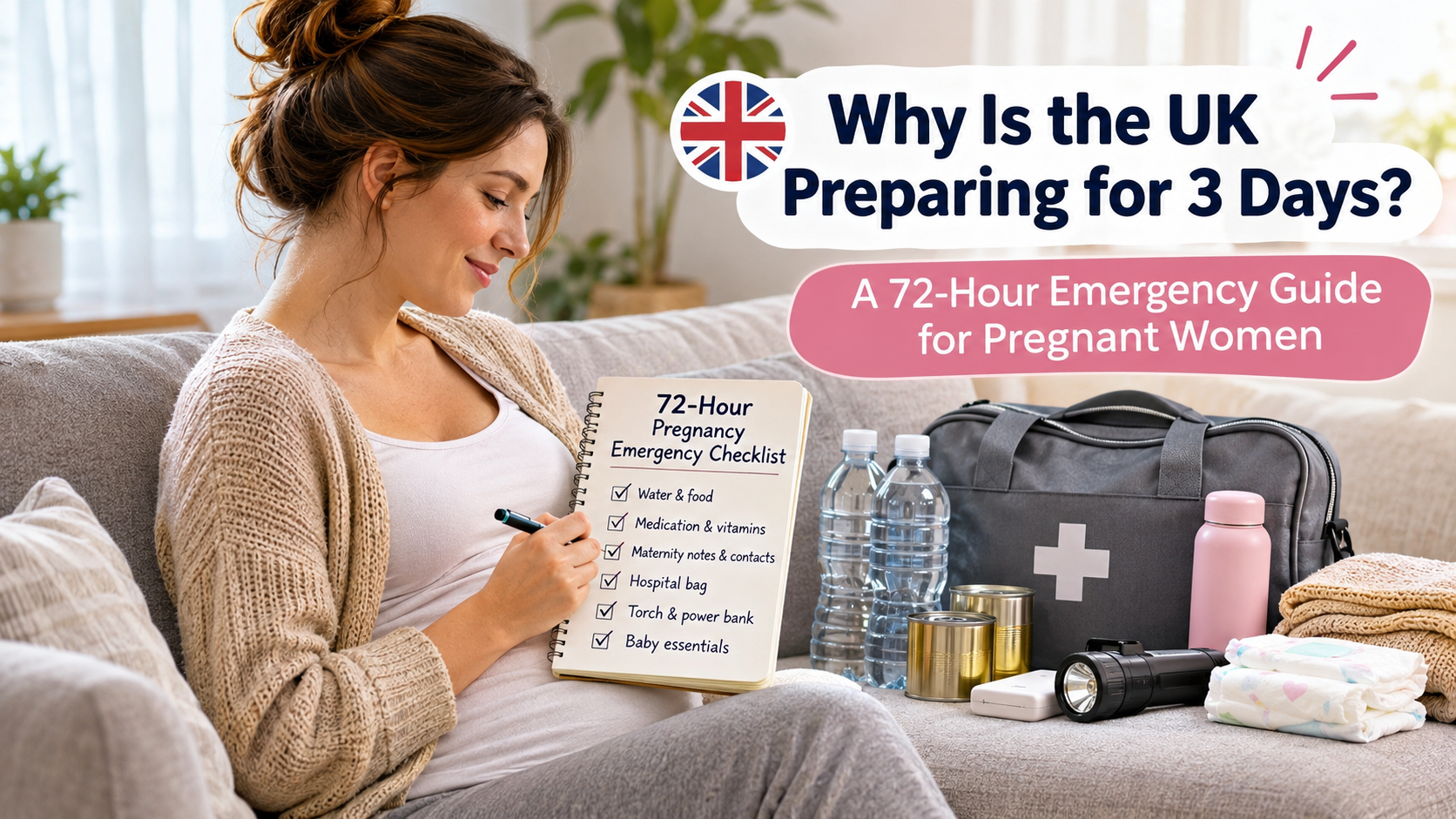
Here's what you need to know about the UK's three-day emergency advice, including a pregnancy-specific preparation checklist.
Why Is the UK Government Asking People to Prepare for 3 Days?
On 22 October 2026, the UK Government launched its updated Be Ready campaign, encouraging households to prepare for up to 72 hours of disruption to essential services.
The advice covers situations such as:
- Severe storms and flooding
- Electricity or water supply interruptions
- Disruption to phone networks or internet services
- Difficulties accessing shops or transport
- Other short-term emergencies affecting everyday life
The aim is to help households manage temporary disruption while services are restored.
Does this mean an emergency is about to happen?
No specific emergency has been announced as the reason for the three-day recommendation.
The British Red Cross has explained that preparing for 72 hours is a sensible precaution, not an instruction to panic or stockpile large quantities of supplies.
The guidance is about being prepared for unexpected disruption, rather than predicting that a particular event will happen.
Why Might Pregnant Women Need to Prepare Differently?
Pregnancy can involve additional everyday needs, including regular meals, access to drinking water, prescribed medication, antenatal appointments and maternity care.
If essential services are temporarily disrupted, having a simple plan can make these needs easier to manage.
For example, you may need to consider:
- Having suitable pregnancy-safe food available
- Keeping prescribed medication and supplements accessible
- Making sure you can contact your midwife or maternity unit
- Planning how to reach hospital if transport is affected
- Keeping your pregnancy notes and important contact numbers together
- Preparing for labour if you're approaching your due date
You do not need an expensive survival kit. Many useful items may already be in your home.
What Should Pregnant Women Put in a 72-Hour Emergency Kit?
A pregnancy emergency kit should include basic household essentials alongside items relevant to your stage of pregnancy.
1. Drinking Water
The government's emergency advice recommends keeping bottled water available for temporary disruptions.
A general starting point is approximately three litres of drinking water per person per day, with additional water for cooking and hygiene.
For three days, this means at least nine litres per person for drinking, plus additional supplies as needed.
During pregnancy, your individual hydration needs may vary, particularly in hot weather or if you're experiencing vomiting. Ask your midwife for personalised advice if necessary.
2. Pregnancy-Safe Food That Is Easy to Store
Choose familiar, non-perishable foods that you can eat safely without relying on a fridge, freezer or cooker.
Depending on your dietary needs, examples include:
- Plain crackers, oatcakes and cereal bars
- Dried fruit and nuts, if suitable for you
- Tinned beans, pulses and vegetables
- Tinned fruit in juice
- Shelf-stable foods that can be eaten without cooking
- Long-life milk or suitable alternatives in unopened packaging
Check food labels, storage instructions and use-by dates.
Some foods should be avoided or limited during pregnancy. Follow NHS food safety advice, particularly for fish, unpasteurised dairy products and foods that need refrigeration.
If you have gestational diabetes or another condition requiring a particular diet, discuss emergency food options with your maternity team.
3. Medication and Pregnancy Supplements
Keep your prescribed medication and pregnancy supplements somewhere accessible.
If possible, maintain a reasonable supply in accordance with your prescription and pharmacist's advice.
Do not stop or change prescribed medication without medical guidance.
If you rely on medication that needs refrigeration, ask your pharmacist how it should be managed during a power cut.
4. Your Pregnancy Notes and Important Contacts
Keep important maternity information in one accessible place.
This might include:
- Your maternity notes or access details for digital records
- Your midwife's contact number
- Your hospital maternity triage number
- Your NHS number
- Details of prescribed medication
- Relevant information about pregnancy complications or allergies
It is also useful to keep important telephone numbers written on paper in case your phone battery runs out.
5. A Torch, Power Bank and Other Household Essentials
Consider keeping a torch, spare batteries, charged power bank, warm clothing, basic hygiene supplies and a battery-powered or wind-up radio available.
A phone charger that can be used in a car may also be useful, where appropriate.
Avoid using outdoor cooking equipment, barbecues or generators indoors because of the risk of carbon monoxide poisoning.
What If You Go Into Labour During a Power Cut or Emergency?
This is an important question for anyone approaching their due date.
A power cut or transport disruption does not mean you should delay contacting your maternity team if you think labour has started.
If you're having regular contractions, think your waters have broken or are worried about your pregnancy, contact your midwife or maternity unit for advice.
If you cannot contact them, NHS 111 can provide further guidance.
Call 999 if you think your baby is coming immediately and you have a strong urge to push.
You can prepare in advance by:
- Keeping your maternity hospital bag ready
- Checking how to contact your maternity unit
- Discussing a backup transport plan with your birth partner or support person
- Keeping your phone charged where possible
- Knowing which symptoms require urgent assessment
If you have a high-risk pregnancy, ask your maternity team whether you need a more specific emergency plan.
What If My Baby Is Moving Less During an Emergency?
Your baby's movements remain important regardless of what is happening around you.
If your baby is moving less than usual, has stopped moving or their usual movement pattern has changed, contact your midwife or maternity unit immediately.
Do not wait until the next day, even if there is a power cut, severe weather or other disruption.
Do not rely on a home heartbeat monitor or a private reassurance scan to decide whether your baby is well.
Urgent concerns about fetal movements need assessment through your NHS maternity service.
What Should I Prepare If I Have a Newborn Baby?
Families with newborn babies may need a few additional supplies in their emergency kit.
These could include:
- Nappies and baby wipes
- Spare baby clothes and blankets
- A safe supply of feeding equipment
- Any prescribed medication
- Important baby healthcare information
- A suitable infant feeding plan
If you're formula feeding, consider discussing safe feeding options during water or electricity interruptions with your midwife or health visitor.
Ready-to-feed infant formula can be useful during emergencies because it does not require mixing with water. Follow the manufacturer's instructions carefully and use sterile feeding equipment.
Do not dilute formula or attempt to make homemade infant formula.
If you're breastfeeding, continuing to breastfeed may help simplify feeding during an emergency, although you should still plan for your own food, fluids and support.
What If I Have a Baby Scan Appointment During an Emergency?
Unexpected disruptions can affect travel and scheduled appointments.
If you have a private ultrasound appointment booked, check with your clinic if severe weather, transport disruption or a power cut may affect your visit.
At Future Baby, we welcome expectant families at our clinics in Reading, Leicester and Peterborough.
Our pregnancy ultrasound services provide opportunities to see your baby at different stages of pregnancy.
However, private baby scans are not a replacement for routine NHS antenatal care, maternity assessment or emergency medical treatment.
If you have symptoms such as vaginal bleeding, severe pain or reduced baby movements, contact the appropriate NHS maternity service rather than waiting for a private scan appointment.
Frequently Asked Questions About the UK 3-Day Emergency Advice
Is the UK introducing food rationing?
The government's Be Ready announcement does not introduce food rationing. It encourages households to keep a modest supply of food and water to manage temporary disruptions.
Why is the UK asking people to prepare for 72 hours?
Three days is a practical preparation period that may help households cope with temporary interruptions to electricity, water, transport, communications or access to shops.
Should pregnant women be worried about the new advice?
The announcement is not, by itself, a reason to expect an imminent emergency. Pregnant women can benefit from making a simple plan that reflects their individual maternity needs.
How much water should a pregnant woman store for three days?
The general emergency-planning starting point is at least nine litres of drinking water per person for three days, plus water for food preparation and hygiene. Individual needs may be higher.
What if I am 36, 37, 38 or 39 weeks pregnant?
If you're approaching your due date, keep your hospital bag, maternity notes and contact details accessible. Discuss any individual concerns about labour or transport disruption with your maternity team.
What if I need to see my midwife during an emergency?
Contact your usual maternity service. If you cannot reach them, NHS 111 can help direct you. For a life-threatening emergency, call 999.
Can I still have my private baby scan?
If there is a disruption affecting your appointment, contact your clinic for advice. Private scans should never delay urgent NHS maternity care.
Final Thoughts: Prepare, Don't Panic
The UK's 72-hour emergency advice is about practical preparation, not fear.
For pregnant women and families with young babies, keeping essential supplies available and knowing how to contact maternity services can make unexpected situations easier to manage.
You don't need to prepare for every possible scenario. Start with the basics, consider your personal circumstances and ask your midwife for advice where needed.
At Future Baby, we're here to share in your pregnancy journey.
Explore our pregnancy ultrasound services and find your nearest Future Baby clinic at www.futurebaby.co.uk.
Trusted Sources and Further Reading
- UK Government — Be Ready campaign announcement, 22 October 2026
For official guidance on the UK's 72-hour emergency preparations and pregnancy safety, visit:
-
UK Government – Preparing for Emergencies (Prepare)
https://prepare.campaign.gov.uk/ -
British Red Cross – Why Are We Being Asked to Prepare for 72 Hours?
https://www.redcross.org.uk/stories/disasters-and-emergencies/uk/why-are-we-being-asked-to-prepare-for-72-hours -
NHS – Your Baby's Movements During Pregnancy
https://www.nhs.uk/pregnancy/keeping-well/your-babys-movements/ -
NHS – Signs That Labour Has Begun
https://www.nhs.uk/pregnancy/labour-and-birth/signs-that-labour-has-begun/ -
NHS – Foods to Avoid in Pregnancy
https://www.nhs.uk/pregnancy/keeping-well/foods-to-avoid/
Medical information disclaimer: This article provides general information and does not replace personalised advice from a midwife, doctor or NHS maternity service. Emergency preparation recommendations should be adapted to individual health and pregnancy circumstances.